Professional Black Mold Removal in Mesa, AZ
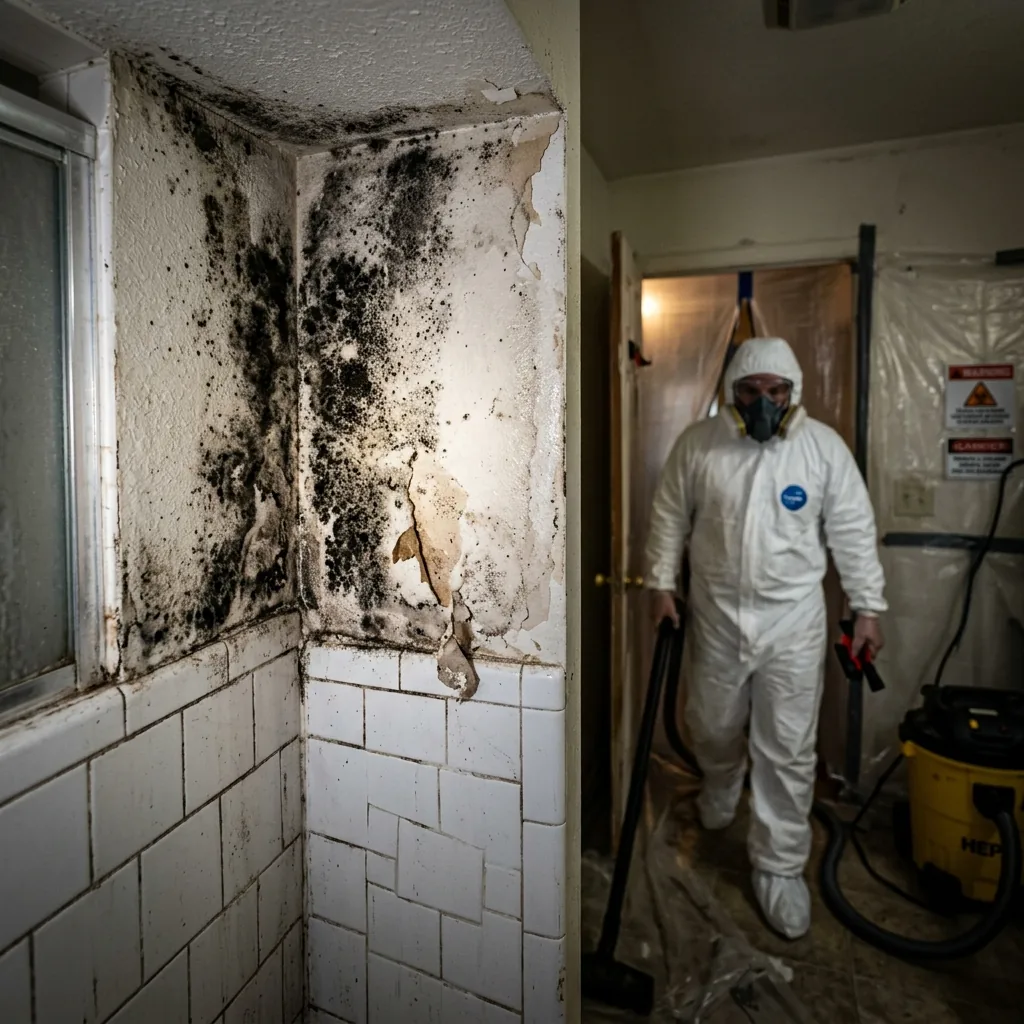
Black mold — Stachybotrys chartarum — is the most concerning mold species found in Mesa homes. It produces mycotoxins and requires enhanced remediation protocols including full HEPA containment, negative air pressure, decontamination chambers, and extensive material removal. Our IICRC AMRT-certified team provides specialized black mold removal with post-remediation clearance testing.
Black Mold Removal in Mesa, AZ
Stachybotrys chartarum (commonly called "black mold" or "toxic black mold") requires prolonged moisture exposure to establish — typically from chronic leaks, persistent condensation, or unresolved water damage lasting weeks or months. It's most commonly found behind walls with slow plumbing leaks, in bathrooms with chronic moisture issues, and in homes with unaddressed monsoon water intrusion. While less common than Aspergillus or Cladosporium in Mesa, Stachybotrys demands the most rigorous remediation approach.
Mesa’s outdoor air is dry, but sealed summer cooling, AC condensation, and slab-on-grade plumbing create indoor moisture pockets that black mold needs. If you only treat visible spots without fixing the water source, colonies often return behind paint or new drywall. Our process pairs specialized black mold removal with source control and, when needed, full water damage restoration.
We start with mold inspection and optional mold testing, then execute containment-based remediation under IICRC AMRT protocols. Related options include standard mold removal and broader mold remediation when multiple species or larger areas are involved.