Professional Soot Cleanup in Mesa, AZ
Soot is more than a black stain — it's a cocktail of corrosive acids, carcinogens, and chemical compounds that permanently damage surfaces if not removed quickly and correctly. Different fire sources produce chemically different soot that requires different cleaning methods. Our IICRC FSRT-certified team identifies soot types, selects appropriate cleaning agents, and methodically cleans every affected surface to prevent permanent damage.
Soot Cleanup in Mesa, AZ — What You Need to Know
Soot cleanup is time-sensitive because soot contains acids that actively corrode metals, discolor natural stone, etch glass, and degrade plastics. Within hours of deposition, soot begins chemical reactions with surface materials — and the longer it sits, the more permanent the damage becomes. Metal fixtures, appliances, and hardware are particularly vulnerable — acidic soot can permanently pit chrome, brass, and stainless steel surfaces within 24-48 hours if not cleaned.
How Soot Cleanup Works
Soot Type Identification
Determine soot composition (protein, synthetic, natural, petroleum). This guides the entire cleaning approach — wrong methods can cause permanent damage.
Dry Cleaning Phase
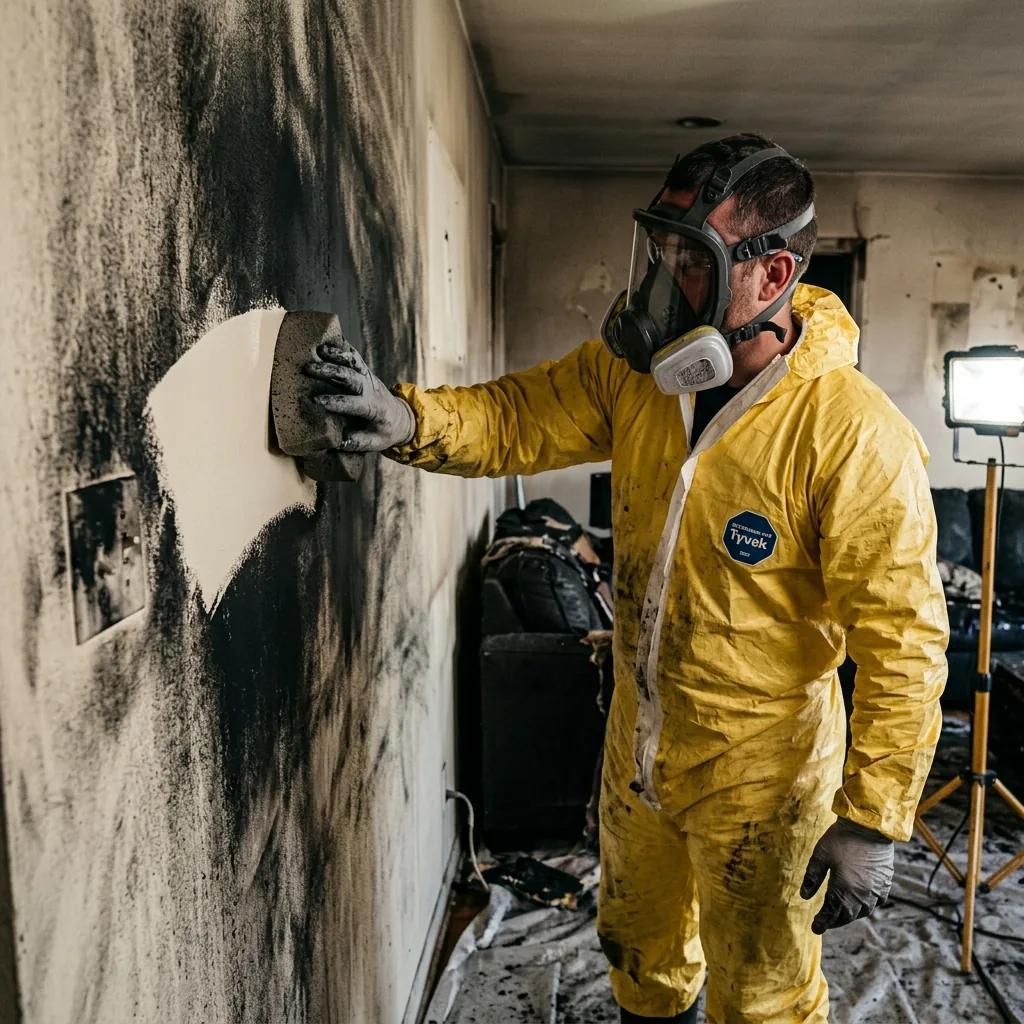
HEPA vacuum loose soot. Dry sponge all surfaces. This step removes the majority of loose soot before wet cleaning. Critical for synthetic soot.
Wet Cleaning Phase
Apply type-appropriate cleaning solutions matched to soot type and surface material. Multiple passes as needed. Rinse residue thoroughly.
Protection & Prevention
Apply corrosion inhibitor to metal surfaces. Seal cleaned surfaces if needed. HVAC cleaning to prevent soot recirculation.