What's Included in Our Mold Remediation Service

Mold Inspection & Assessment

Our AMRT-certified inspector examines your property for visible mold, water damage indicators, and conditions conducive to mold growth. We use moisture meters to check walls, floors, and ceilings for hidden moisture. Thermal imaging identifies temperature anomalies that suggest trapped moisture behind surfaces. We check HVAC systems, crawl spaces, attics, and all moisture-prone areas. The inspection results determine whether air quality testing is recommended and guide the remediation scope.

Air Quality & Surface Testing

When testing is needed, we collect air samples (spore trap cassettes) and surface samples (tape lifts or swabs) from affected areas and control areas for comparison. Samples are sent to an accredited laboratory for analysis. Lab results identify mold species present, spore concentrations, and whether levels are elevated compared to outdoor baselines. This data is essential for insurance documentation and determines the appropriate remediation protocols for the specific mold types found.

HEPA Containment Setup

Before any removal begins, we establish containment barriers using 6-mil polyethylene sheeting and create negative air pressure inside the work zone using HEPA-filtered air scrubbers. This prevents mold spores from spreading to unaffected areas during removal — a critical step that DIY mold cleaning skips. Containment barriers are sealed with tape, and all HVAC registers in the work zone are covered and sealed.

Safe Mold Removal

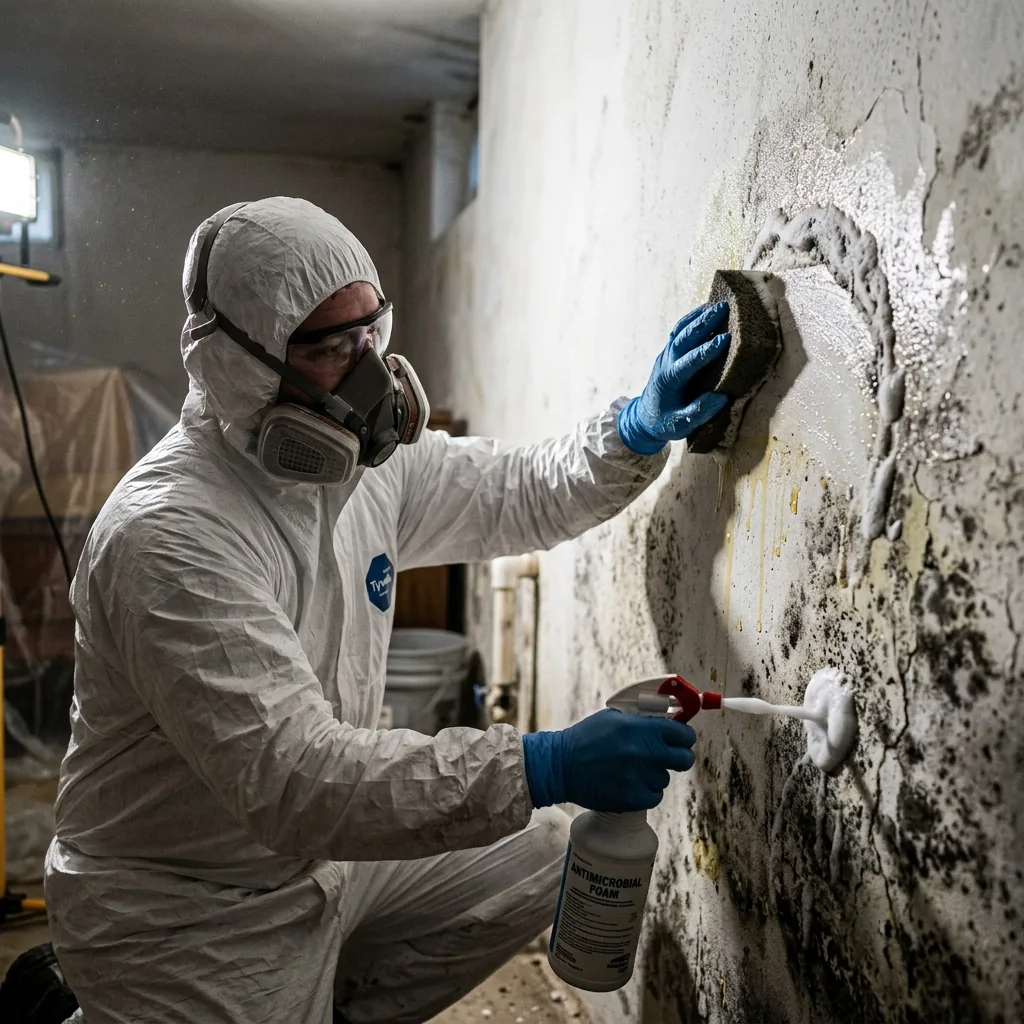
Contaminated materials — drywall, insulation, carpet, padding, and any porous materials with mold penetration — are carefully removed, double-bagged in 6-mil poly bags, and disposed of properly. Non-porous surfaces (studs, concrete, metal) are cleaned with HEPA vacuums and treated with EPA-registered antimicrobial solutions. All work is performed by technicians wearing appropriate PPE: N95 respirators (minimum), Tyvek suits, and gloves.

HVAC Mold Remediation

Mesa homes run AC systems for 6-8 months of the year, and ductwork is one of the most common hidden mold locations. Condensation inside ducts, combined with dust and organic debris, creates a perfect growth environment. We inspect and clean HVAC systems when mold is found in the home — because even if you remediate walls and floors, contaminated ductwork will reintroduce spores every time the system runs.

Post-Remediation Verification (Clearance Testing)

After remediation is complete, we perform — or arrange for independent third-party — post-remediation air quality testing. Clearance testing confirms that spore levels in the remediated area are at or below outdoor baseline levels. This verification is the gold standard for confirming successful remediation and is required by many insurance companies before closing claims. We don't consider a project complete until it passes clearance.

Why Mold Grows in Mesa's "Dry" Climate

Mesa averages only 8 inches of rainfall annually, but indoor mold is surprisingly common. Here's why:

  • Evaporative coolers: Older Mesa homes with swamp coolers add significant indoor moisture
  • AC condensation: Systems running 18+ hours daily produce gallons of condensate; clogged drains overflow into attics and walls
  • Sealed construction: Modern energy-efficient homes trap indoor moisture from showers, cooking, and respiration
  • Monsoon leaks: Seasonal roof, window, and foundation water intrusion feeds hidden mold growth
  • Plumbing failures: Hard water corrodes pipes, causing slow leaks that saturate wall cavities for weeks or months
  • Slab moisture: Moisture vapor transmission through concrete slabs — especially in older Mesa neighborhoods — creates chronic humidity under flooring

Common Mold Types Found in Mesa Homes

Aspergillus: Most common indoor mold in Arizona. Found in HVAC systems, bathrooms, and water-damaged drywall. Multiple species with varying health impacts.
Cladosporium: Frequently found on painted surfaces, window sills, and bathroom ceilings. Common allergen.
Penicillium: Often found in water-damaged carpeting, insulation, and wallpaper. Blue-green appearance. Strong musty odor producer.
Stachybotrys chartarum (Black Mold): Less common but most concerning. Requires prolonged moisture exposure. Typically found behind walls with chronic leaks. Produces mycotoxins.

Mold Remediation Cost Factors

Mold remediation costs in Mesa typically range from $1,500 to $9,000+ depending on:

  • Size of affected area: Measured in square feet of contaminated surface
  • Mold type: Stachybotrys (black mold) requires more extensive containment and safety protocols
  • Materials involved: Drywall removal is more extensive than surface cleaning on non-porous materials
  • Accessibility: Attic, crawl space, or behind-wall mold requires more labor
  • HVAC involvement: Duct cleaning adds to total cost but is often necessary