Professional Structural Drying in Mesa, AZ
Structural drying is the science-intensive phase of water damage restoration — using industrial dehumidification, strategic air movement, and psychrometric monitoring to remove moisture from building materials without causing secondary damage. Our WRT-certified technicians use IICRC S500 drying protocols adapted for Mesa's unique desert climate to achieve verified dry standards efficiently.
Structural Drying in Mesa, AZ — What You Need to Know
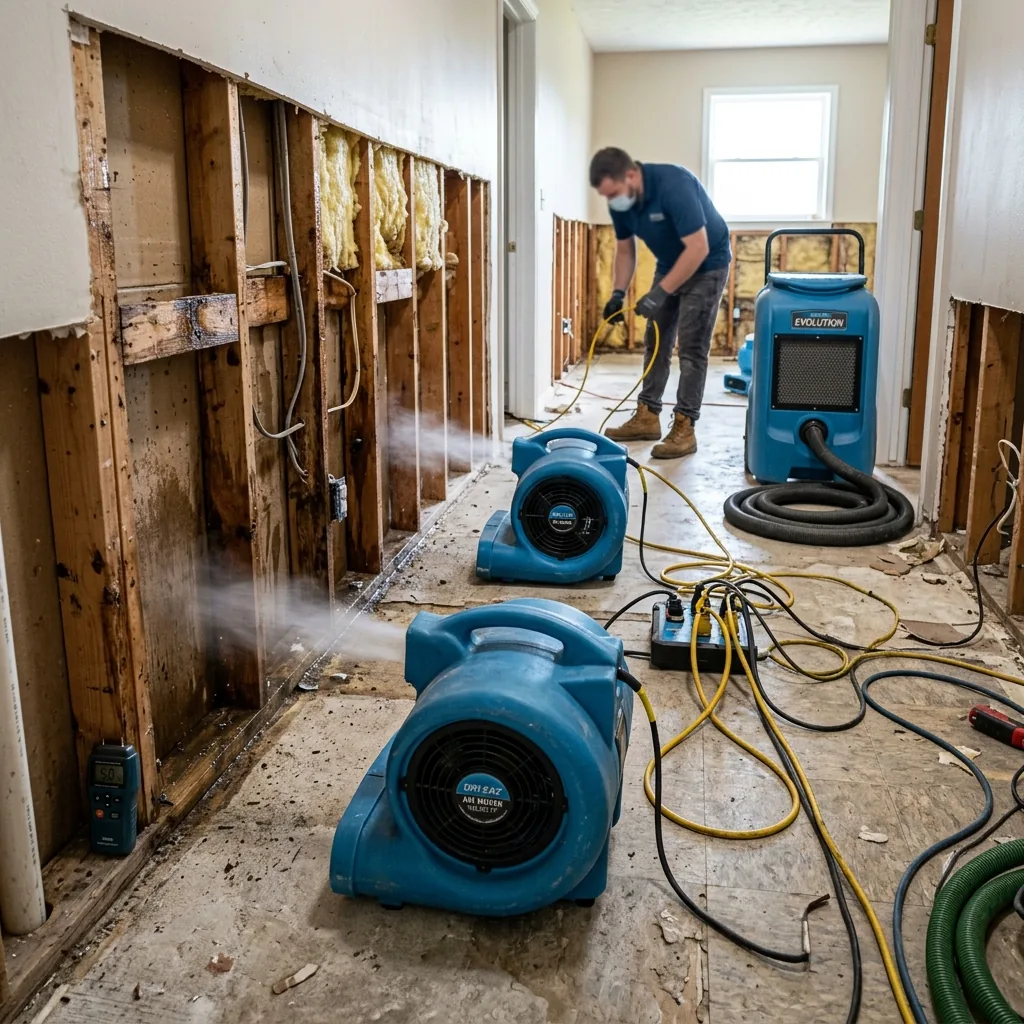
Structural drying is not just "putting fans and dehumidifiers in a room." It's a technical process that requires understanding psychrometrics (the science of air moisture relationships), material-specific drying rates, and equipment placement optimization. Drywall, wood framing, concrete, and insulation all absorb and release moisture at different rates — and Mesa's climate creates unique drying dynamics. Our WRT-certified technicians calculate specific moisture loads, set up equipment configurations matched to the building's characteristics, and take daily readings at multiple checkpoints to verify drying progress.
How Structural Drying Works
Drying Plan Development
Calculate moisture loads based on affected materials, room sizes, and ambient conditions. Determine equipment type, quantity, and placement.
Equipment Deployment
Place dehumidifiers, air movers, and specialty drying equipment. Configure airflow patterns for maximum efficiency. Initial moisture readings established.
Daily Monitoring
Take moisture readings at all checkpoints every 24 hours. Adjust equipment placement and settings based on drying progress. Document all readings.
Dry Standard Verification
Final readings confirm all materials meet IICRC dry standards. Equipment removed. Drying documentation completed for insurance. Space cleared for repair work.