Professional Water Damage Restoration in Mesa, AZ — 24/7 Emergency Response
When water invades your Mesa home — from a burst pipe at midnight, monsoon roof leak, or appliance failure — every minute counts. Our IICRC-certified water restoration team arrives within 60 minutes, extracts standing water, sets up industrial drying equipment, and manages the entire process through to full restoration.
Full-Service Water Damage Restoration in Mesa, AZ
Water damage is the most common — and most time-sensitive — property emergency in Mesa. Arizona's monsoon season brings flash floods and roof leaks from June through September, while year-round plumbing failures, water heater bursts, AC condensation overflows, and appliance leaks keep our crews busy every month of the year. The hard water running through Mesa's municipal system accelerates pipe corrosion, making homes built before 1995 with galvanized or copper plumbing especially vulnerable to sudden failures.
Our water damage restoration process follows IICRC S500 standards — the industry benchmark established by the Institute of Inspection, Cleaning and Restoration Certification. From emergency water extraction through final moisture verification, every step is documented, measured, and recorded for your insurance claim and your peace of mind.
When Do You Need Water Damage Restoration in Mesa?
Standing Water or Active Flooding
Any amount of standing water — from a burst pipe, monsoon roof leak, appliance failure, or sewage backup — requires immediate professional extraction. Don't attempt to vacuum water with a household vacuum (shock hazard).
Water Stains Appearing on Walls or Ceilings
Brown or yellow stains on drywall indicate active or recent water intrusion. Common in Mesa homes during monsoon season (roof leaks) and year-round from slow plumbing failures hidden behind walls.
Warped, Buckling, or Cupping Floors
Flooring that lifts, cups, or feels spongy signals moisture underneath — frequently from slab leaks in Mesa homes. Hard water corrosion weakens copper joints and galvanized pipes beneath the foundation over time.
Sudden Spike in Your Water Bill
An unexplained increase in water usage often indicates a hidden slab leak or supply line failure. Mesa's City Utilities can confirm unusual consumption patterns. If your bill jumps 30%+ without explanation, investigate immediately.
How We Handle Water Damage Restoration in Mesa
Emergency Response & Extraction
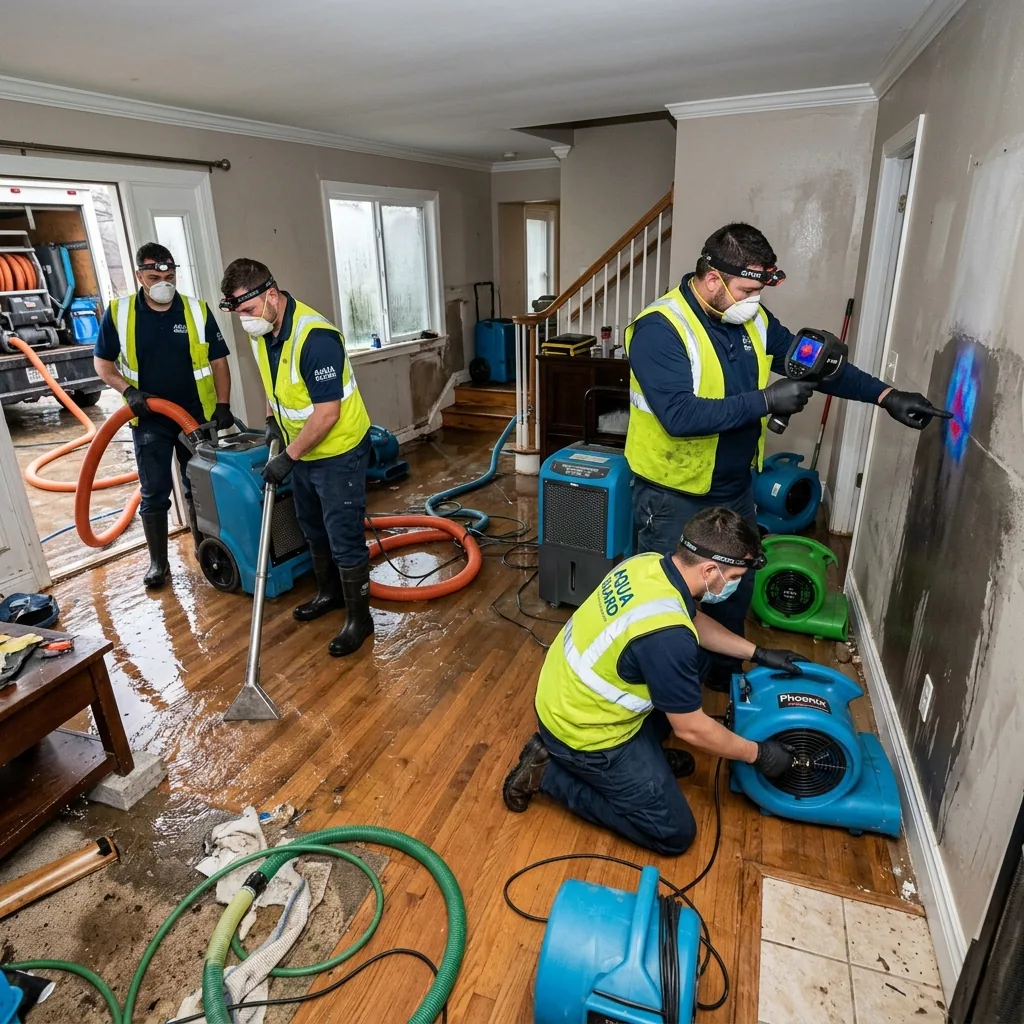
We arrive within 60 minutes, stop the water source if active, and begin extraction with truck-mounted and portable units. Standing water is removed first, then carpet/pad extraction follows.
Inspection & Moisture Mapping
Using moisture meters, thermal imaging, and hygrometers, we map every affected area — including hidden moisture behind walls and under flooring. This map guides equipment placement and documents damage for insurance.
Drying & Dehumidification
LGR dehumidifiers and high-velocity air movers are placed per IICRC S500 calculations. We monitor daily with moisture readings and adjust equipment as drying progresses. Average drying time: 3-5 days.
Verification & Final Walkthrough
Post-drying moisture readings confirm all materials are at or below IICRC dry standards. We do a final walkthrough, remove equipment, and provide complete documentation for your insurance file.
Most Common Sources of Water Damage in Mesa Homes
Mesa's Most Trusted Water Damage Restoration Team
WRT Certified
Every technician holds active IICRC Water Restoration Technician certification.
24/7 Emergency
Round-the-clock response, 365 days a year including holidays and monsoon season.
Full Documentation
Moisture maps, photo logs, and scope reports formatted for every major insurer.
Locally Owned
Mesa-based crews who know your neighborhood, your housing stock, and your climate challenges.
Water Damage Restoration Questions Mesa Homeowners Ask
Water Damage Restoration Across Mesa & the East Valley
Explore Our Complete Restoration Services
Emergency Water Extraction
Rapid water removal with truck-mounted extractors — available 24/7 across Mesa.
Flood Damage Cleanup
Complete monsoon flood restoration including decontamination and structural drying.
Burst Pipe Restoration
Damage repair from burst or leaking pipes — common in Mesa's aging plumbing.
Sewage Backup Cleanup
Category 3 biohazard extraction, disinfection, and safe disposal.
Mold Removal
Water damage often leads to mold — we handle both with certified protocols.
Storm & Monsoon Damage
Rapid response for Arizona monsoon damage — roof leaks, flooding, wind damage.